Winter Haven Irrigation: Sprinkler System Installation in Winter Haven, Florida - Residential & Commercial

Winter Haven Irrigation has more than 15 years of experience designing, installing and repairing in-ground sprinkler systems in Winter Haven, Florida. Residential sprinkler system installation is our primary service, and we also handle commercial systems, repairs, maintenance, inspections, and specialty work such as pumps, drip irrigation, drainage and backflow preventers.

Every system we install is designed to comply with Florida Statute 373.62 and with the Southwest Florida Water Management District rules that apply to the property. Each installation includes the backflow protection and automatic shutoff technology required for the property. You get a system sized to the property’s available water supply, with efficient nozzles selected for the lawn and planting beds. Application rates are suited to Central Florida’s sandy soil, so the lawn receives more even coverage instead of developing dry and oversaturated areas.

We install and service irrigation systems throughout Winter Haven, Lake Alfred, Eagle Lake, Dundee and surrounding Polk County communities. Our systems can run on municipal water, reclaimed water, private wells or lake water. A lakefront property in Winter Haven and a well-fed property in Dundee may require very different equipment and layouts. We have designed systems for both types of properties throughout Polk County. Call or use our online form to inquire about a free on-site estimate on our sprinkler services today.

Get A Free Estimate

Why Choose Winter Haven Irrigation for Sprinkler System Installation in Winter Haven

Winter Haven Irrigation is a certified irrigation contractor, and every system is planned from conditions measured on the property.

  • 15 years in Polk County: We have installed and serviced systems on local turf, planting beds, wells, pumps and municipal connections.
  • Free estimates on new systems: We measure and draw the plan before you commit to anything.
  • Sized to your water supply: Zones are built to the pressure and flow the property can actually deliver, not to a standard template.
  • Even coverage: Nozzles on a zone are selected for matched precipitation rates, so one corner of the lawn does not dry out while another stays soaked.
  • Zoned by plant needs: Wherever the layout allows, we separate turf, planting beds and trees according to their watering requirements.
  • Efficient hardware: Pressure-regulated spray bodies and rotary nozzles are standard on most residential installations. A WaterSense-labeled controller is an available upgrade.
  • Backflow protection matched to the water source: The assembly is matched to the water source and to what could flow back from it.
  • Rain shutoff on every system: Florida Statute 373.62 requires automatic landscape irrigation systems to include functioning technology that interrupts watering when sufficient moisture is present.
  • Commissioned before sign-off: Every zone is run and measured in front of you before we call the job done.

Call (863) 877-4859, or send your details through the quote form.

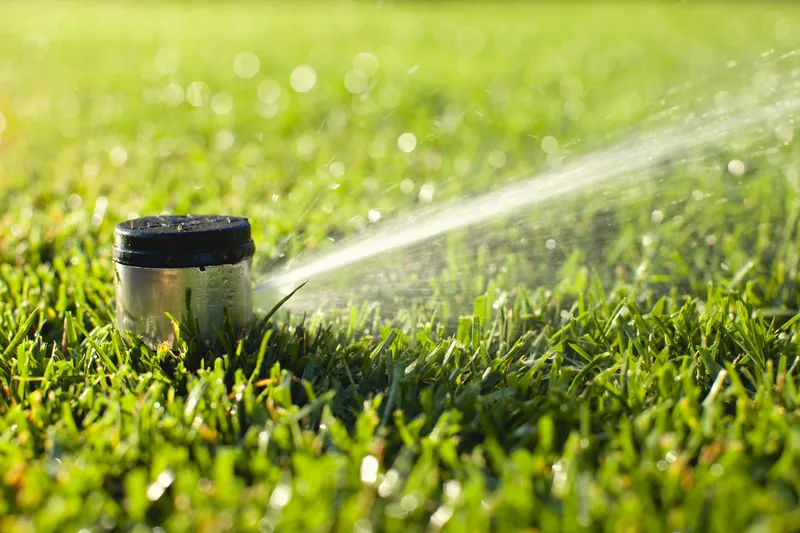
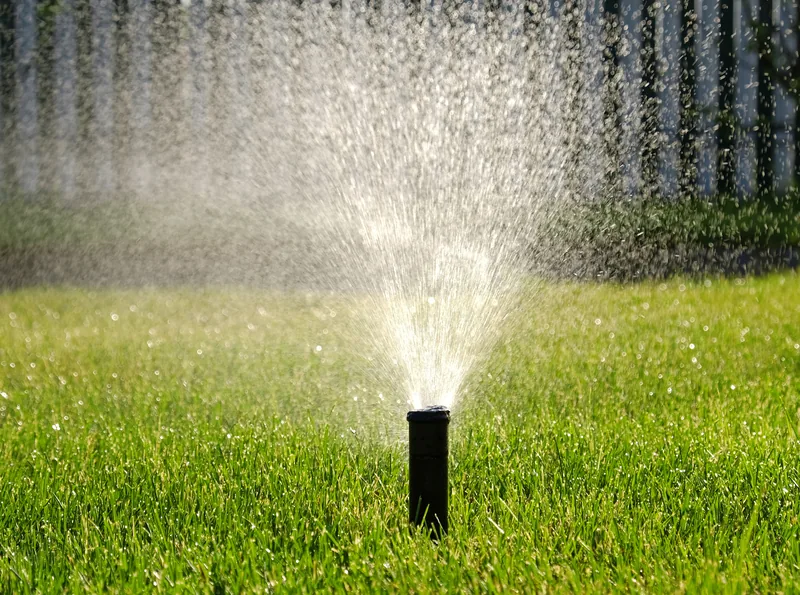
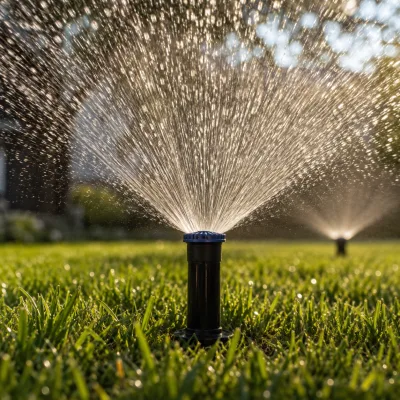
Pop-up rotor head set flush in thick, broad-bladed lawn turf, running a single stream

A Sprinkler System Designed for Your Property

A complete in-ground sprinkler system starts at the water source and ends at the last head on the last zone. We take on lawn sprinkler system installation for new lawns, and full replacements where an old underground sprinkler system has failed. Either way the property evaluation comes first, and the layout follows what we find.

What We Measure First

Two houses on the same street can need different systems. We read static pressure at an outside hose bib with nothing else running, then time the flow into a bucket to get gallons per minute. Most residential spray zones are designed around 30 to 45 psi at the nozzle. Zone count follows the available flow. Push a zone past what the supply can deliver and the heads at the far end run weak. High-pressure supplies may need a regulator, while low-pressure supplies may require a booster pump. Those readings set the zone count, the head types and where each head goes, which is what a lawn irrigation contractor should establish before quoting.

Zones for Lawn, Beds and Trees

Turf, beds and trees draw water at different depths and different rates. Put them on one valve and you overwater one to keep another alive. St. Augustine needs noticeably more water than Bahia, which roots deeper and rides out a dry spell. We pick sprays for strips, rotors for open turf and drip for beds, chosen by area. Tree roots reach wider and deeper than turf roots, so we keep trees off a lawn zone whenever the layout permits.

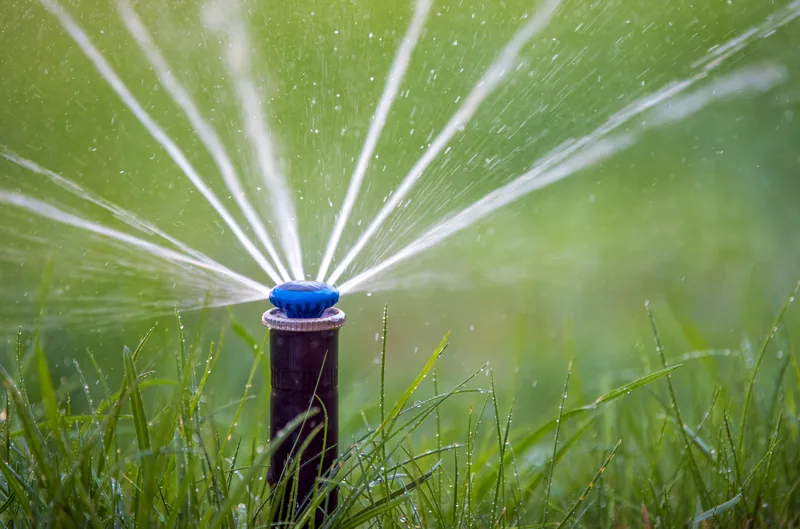
Pop-up spray head throwing a full-circle pattern at the nozzle

Heads, Pipe, Valves and Controls

Heads, Rotors and Nozzles

Fixed spray heads cover tight strips and small turf areas. Gear-driven rotors serve larger open lawns. Rotary nozzles deliver 0.4 to 0.6 inches per hour in slow streams, roughly a third of what a fixed spray puts down. Matched precipitation means the heads on a zone apply the same depth per hour, which is why we avoid mixing rotors and sprays on one valve. Pressure-regulating stems keep spray bodies at 30 or 40 psi. In-head check valves stop the lowest head on a slope from draining the lateral.

Heads go in at full head-to-head spacing, with arcs set so water lands on planting instead of the drive, the walls or the windows. A head set short of its neighbor leaves a dry ring that shows up in the turf by June. Wind and high supply pressure push spray off target, which is the other half of why nozzle pressure stays regulated.

Underground Piping, Valves and Controls

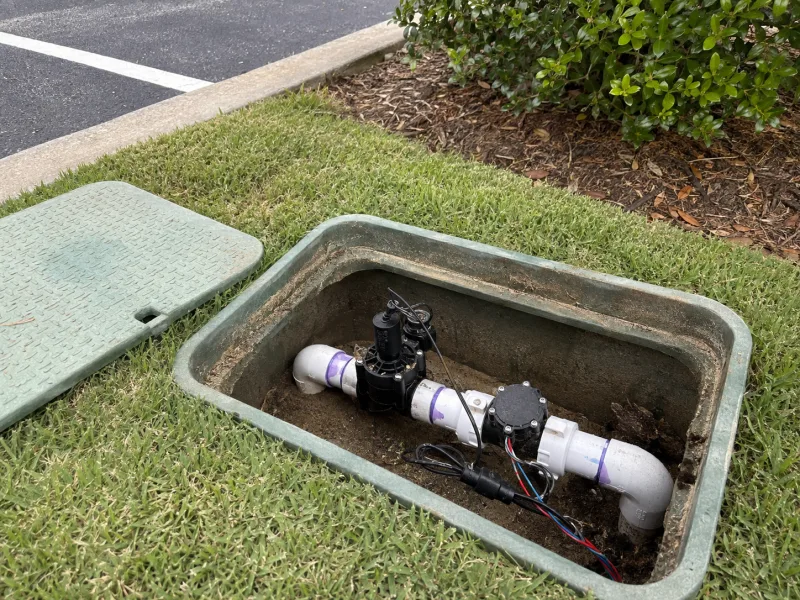
We run Schedule 40 PVC on the mainline, the thicker-walled grade that holds pressure all the time, and Class 200 or flexible poly on the laterals that only see pressure while a zone runs. Laterals usually sit 6 to 12 inches deep, and the mainline runs deeper, below the reach of routine lawn work. Solenoid valves group into a few accessible valve boxes, and pipe goes in behind a vibratory plow or a trencher, whichever suits the lot and the turf.

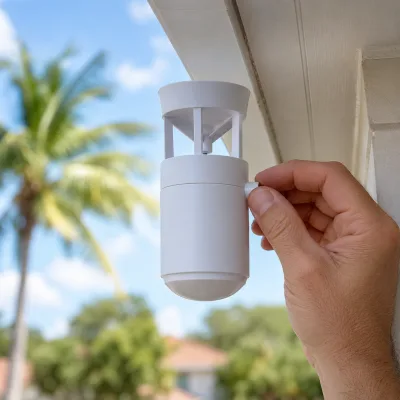
The controller needs one station per zone plus spare capacity for later changes. Low-voltage wiring runs back to the controller, and where appropriate we leave spare wires in the trench so a zone can be added later without digging again. Lightning and power surges are common in Central Florida, so the controller goes on a GFCI-served, surge-protected connection. We mount the rain sensor in open weather, clear of eaves and tree cover, so it reads the rain the lawn actually gets.

Sprinkler Installation, Repair and Irrigation Services in Winter Haven and Polk County

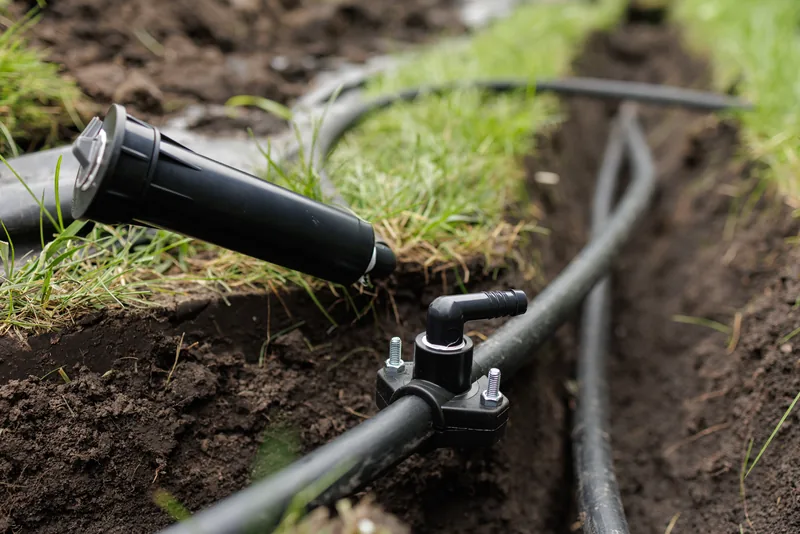
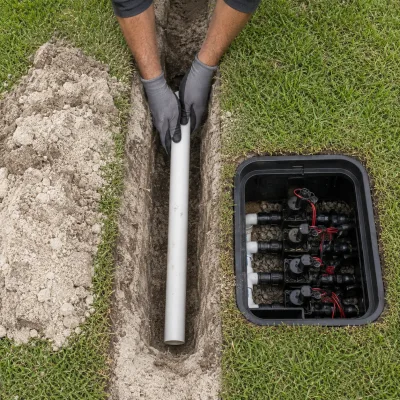
Pop-up rotor and black poly lateral beside an open trench, saddle tee fitted

Sprinkler System Installation

A complete in-ground system runs from the water source to the last head on the last zone. We install new systems and full replacements, sized to the pressure and flow the property can actually deliver, with backflow protection and the rain shutoff device Florida Statute 373.62 requires. Every zone is run and measured with you before we call the job done.

Commercial irrigation mainline with a master valve and flow sensor

Commercial Irrigation

On a large site, a mainline break can pour water for hours before anyone spots it. We pair a master valve with a flow sensor set just above the largest zone's normal draw, so an abnormal flow shuts the mainline down. Two-wire decoder control runs dozens of valves across HOAs, retail centers, offices, multifamily and municipal grounds.

Two pop-up heads watering turf either side of a curved paver walkway

New Construction Irrigation

The cheapest time to run pipe under a driveway is before the driveway exists. We set sleeves at roughly twice the pipe diameter under future drives, walks and patios, coordinate mainline and valve locations with the builder's utility plan, and charge and test the system before sod goes down. Heads are set to finished grade, so nothing needs lifting after landscaping.

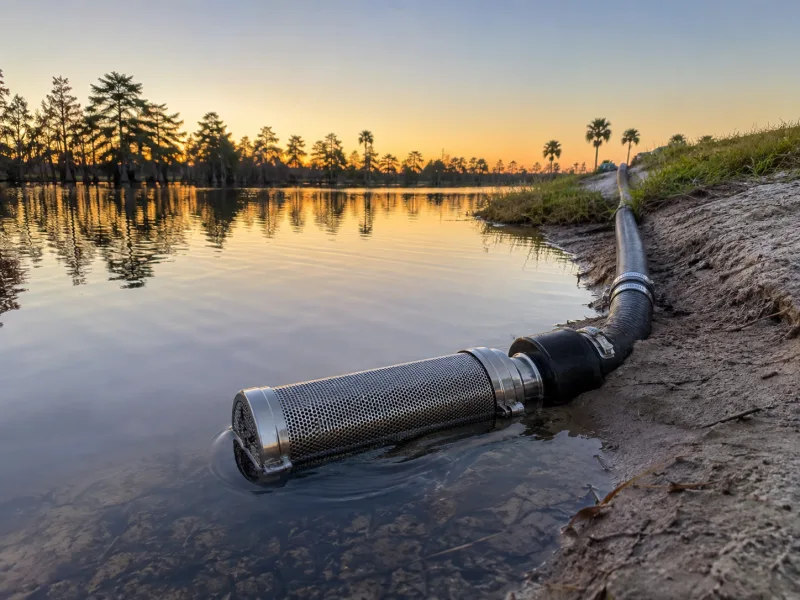
Screened lake intake feeding a waterfront irrigation system

Lake-Fed Irrigation Systems

Waterfront and canal lots can draw irrigation water straight from the lake, so none of it goes through a water meter. We design and install pump-fed systems for eligible properties, including intake screening, filtration, pressure control and properly sized zones. Surface water carries algae and organic debris, so the intake screen is the part that needs checking most often, and a foot valve holds the prime between cycles.

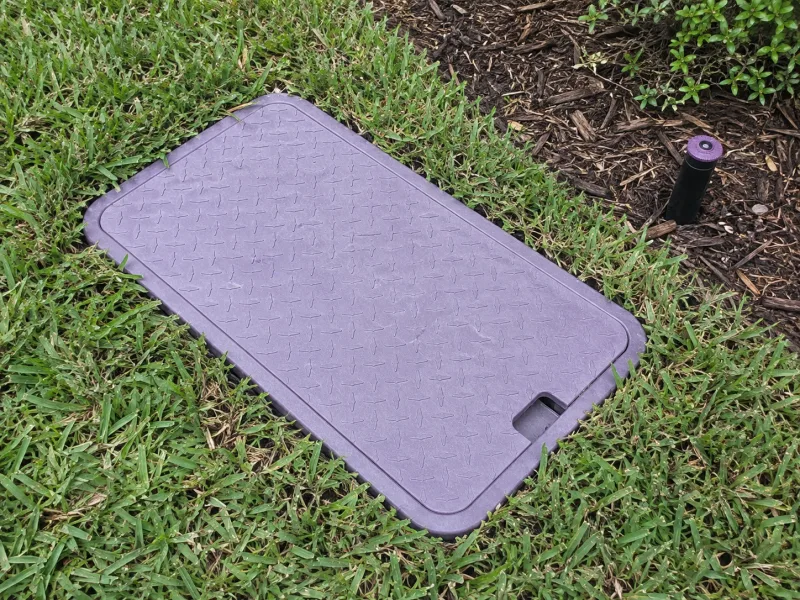
Purple valve-box lid marking a reclaimed water irrigation system

Reclaimed Water Irrigation

Reclaimed water is treated wastewater, piped separately and sold for irrigation. We identify the system with purple pipe, purple valve-box lids and tagged heads, and keep it physically apart from the potable plumbing. We do not install hose connections that could be mistaken for a drinking-water outlet. Filtration ahead of drip zones catches the solids that block small emitters.

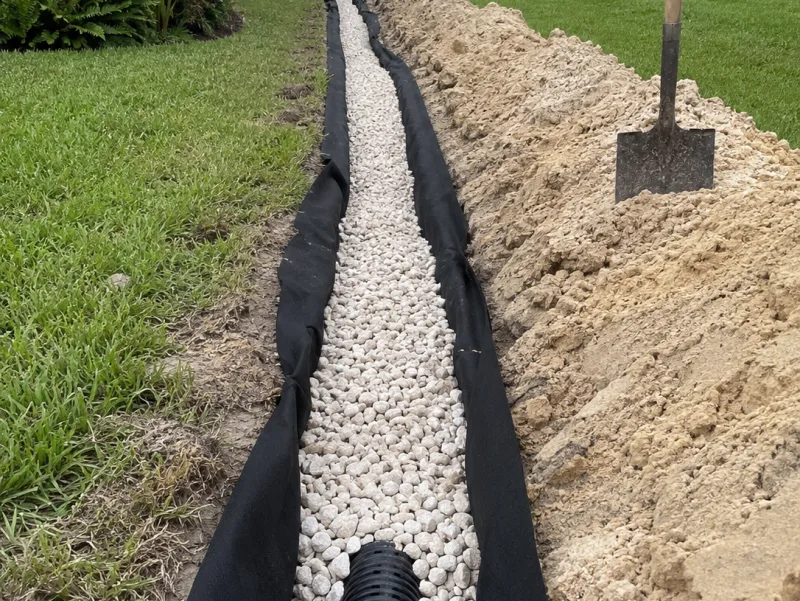
French drain trench with washed stone in a Central Florida yard

Yard Drainage Systems

Wet-season rain can leave a flat Central Florida yard saturated for days. We build French drains with perforated pipe, washed stone and filter fabric, and set catch basins at the low points. A working drain needs about 1% of fall, roughly an eighth of an inch per foot, to a suitable discharge point.

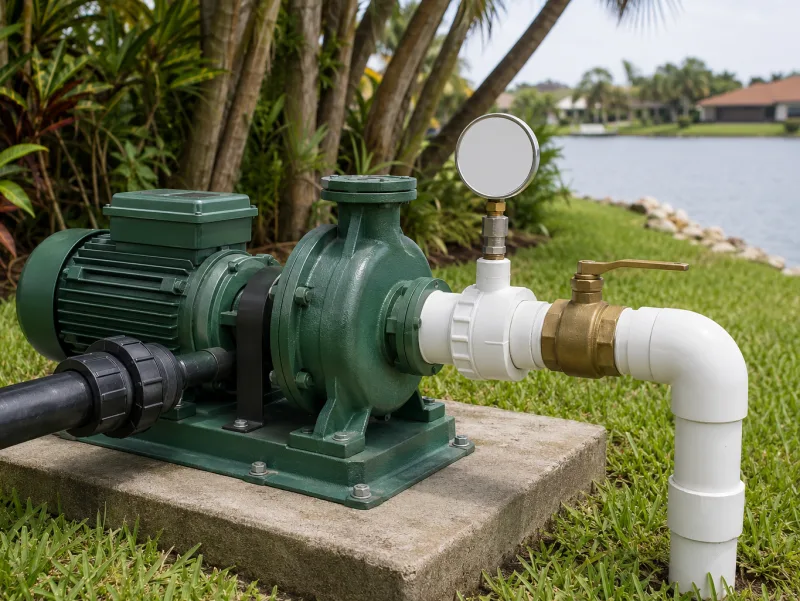
Centrifugal irrigation pump installed beside a lake intake

Irrigation Pumps

Well- and lake-fed systems require pumping equipment to produce sufficient pressure. We fit a centrifugal pump for surface draw or a submersible for a drilled well, sized by gallons per minute at the pressure the heads need. A pump start relay lets the controller switch a load beyond its own capacity, with dry-run protection on the pump.

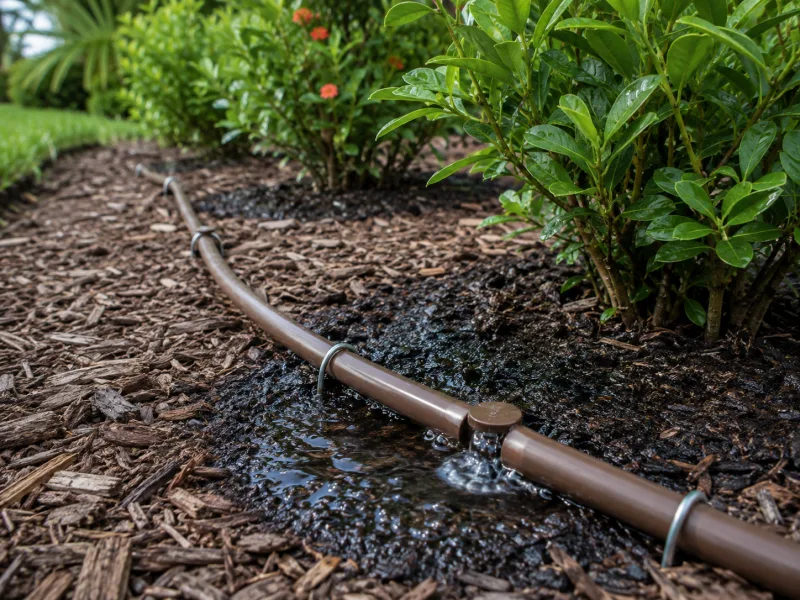
Drip irrigation tubing and emitters running through a planting bed

Drip and Micro-Irrigation

Trees, shrubs and beds need lower flow than a lawn spray zone provides. Pressure-compensating emitters hold the same 0.5 to 2.0 gallons per hour at the far end of a line as at the start, behind a 25 psi regulator and a fine filter. District restrictions treat low-volume micro-irrigation separately from lawn zones.

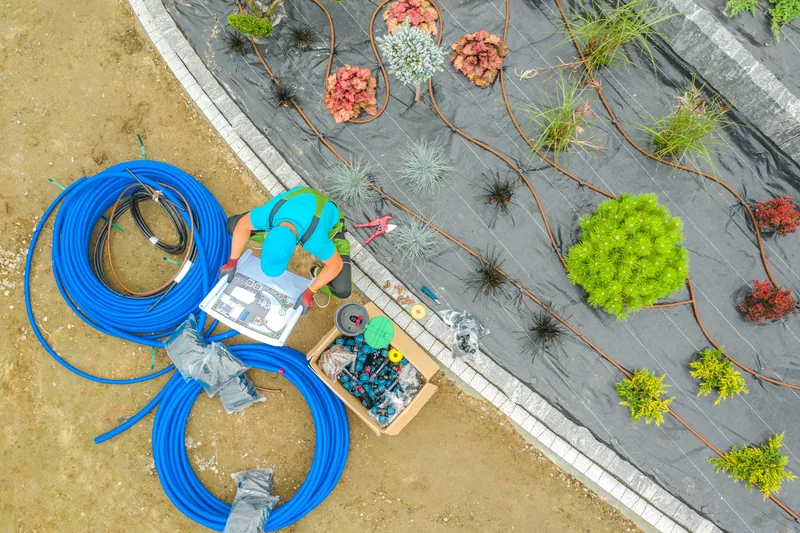
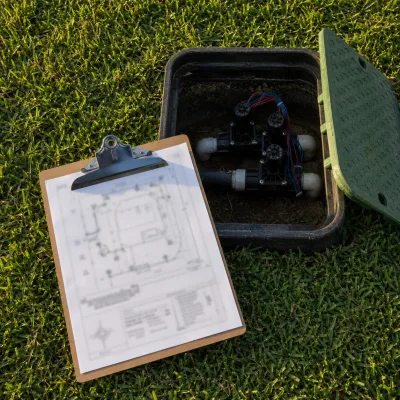
Overhead view of an irrigation install in progress, plan in hand beside coils of poly pipe

Irrigation System Design

You can buy the plan without buying the installation. Builders, landscape architects and owners use the completed design to request bids from installation contractors. The drawing marks head types, spacing, valve locations and pipe sizes, and holds pipe velocity near 5 feet per second to limit water hammer. The proposed route may be revised when utility markings reveal an underground conflict.

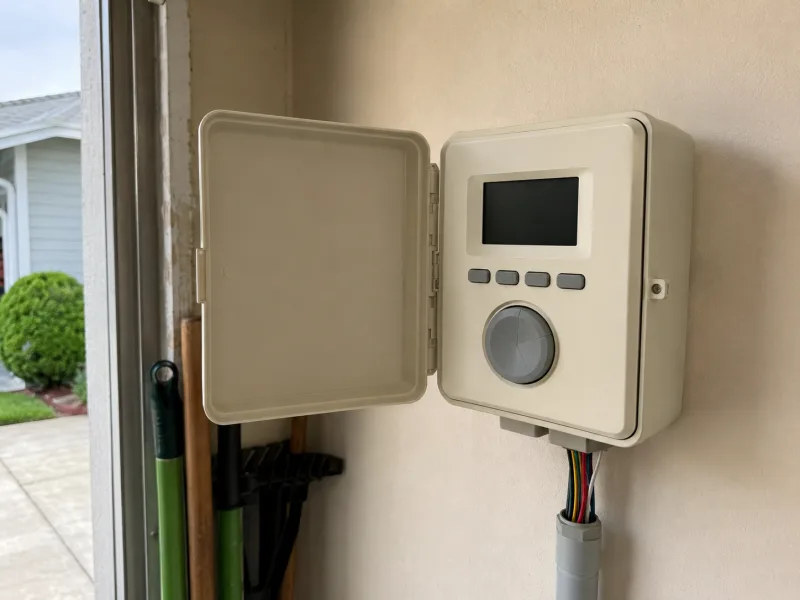
Smart irrigation controller mounted on a garage wall with the cover open

Smart Irrigation Controllers

A clock timer runs the same program whatever the weather does. A WaterSense-labeled smart irrigation controller tracks evapotranspiration, the rate a lawn loses water to sun and wind, and trims run times to match. EPA criteria require at least 20% less outdoor water use, near 7,600 gallons a year on an average home.

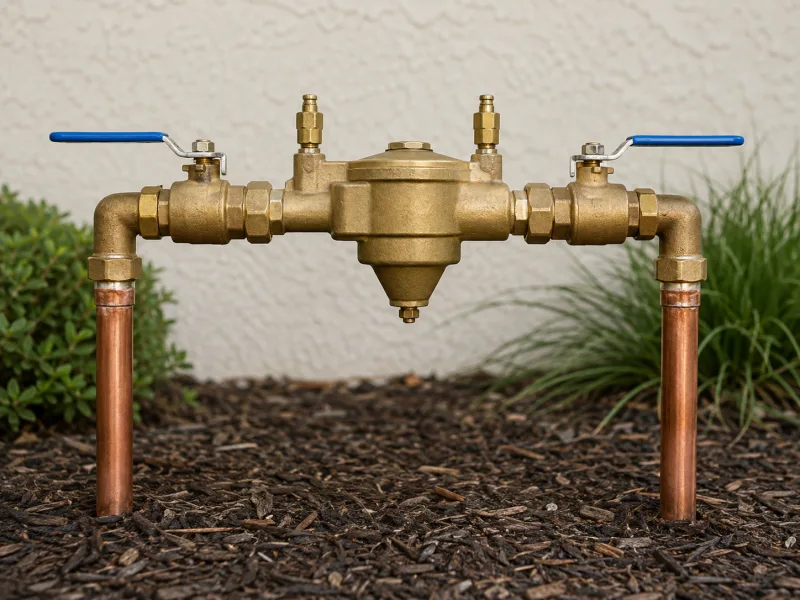
Backflow prevention assembly on an irrigation tie-in

Backflow Preventers

An irrigation tie-in to a drinking-water line is a cross-connection. A pressure vacuum breaker suits sites where it can sit a full 12 inches clear of every head it feeds; a higher hazard, such as a reclaimed line, takes a reduced-pressure assembly. A Florida-certified tester checks it and files the result with the purveyor.

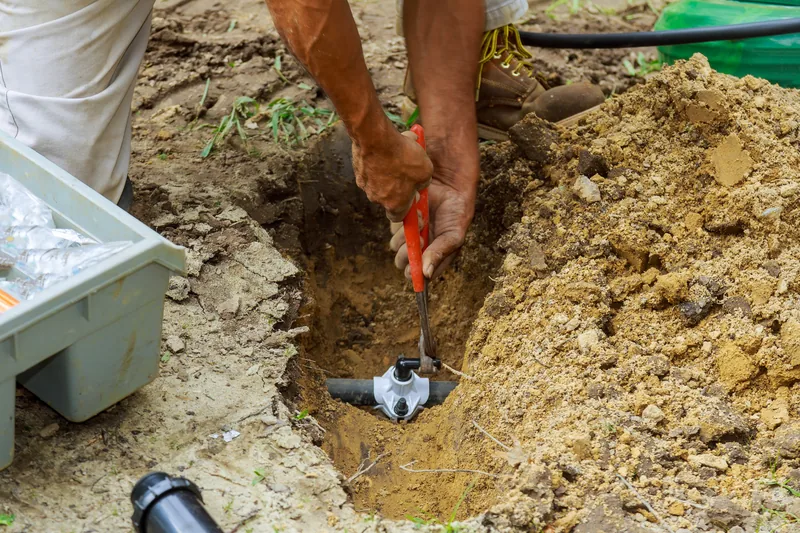
Wrench tightening an irrigation fitting in a hand-dug hole in sandy soil

Irrigation System Repair

Dead zones, sunken heads and persistently wet areas can all indicate different system problems. Sprinkler repair starts with finding the cause. A valve locator and wire tracer find buried valves, damaged wiring and common-wire breaks with limited digging, and a reading at the solenoid separates a failed valve from a break out in the line.

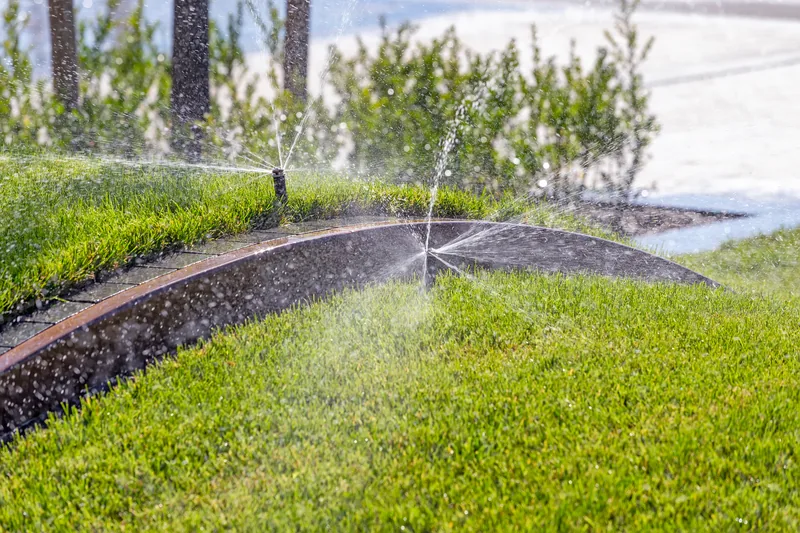
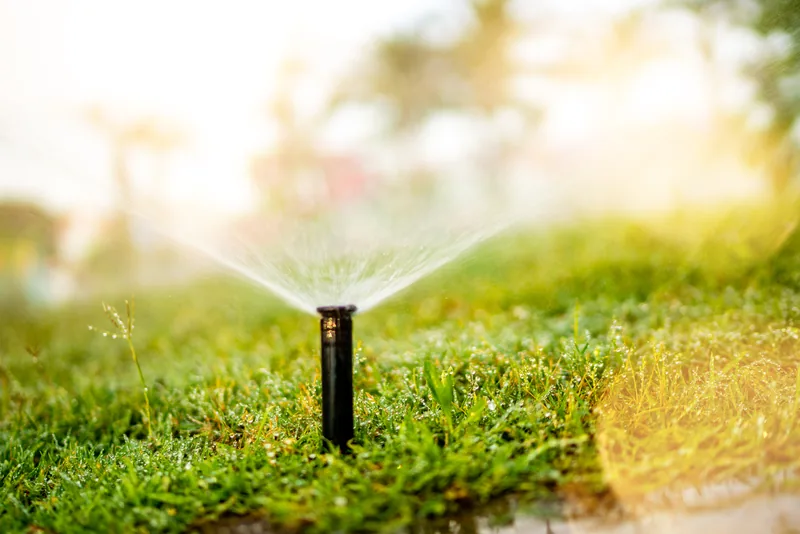
Pop-up spray head running on a lawn edge in warm afternoon light

Irrigation Inspection & Audits

An audit measures what a system actually delivers. We set catch cups on a grid, run the zone, and score distribution uniformity from 0 to 1. Measured spray zones commonly land in the 0.40s or 0.50s, and a score below 0.60 usually indicates a problem with head spacing, pressure or nozzle selection. You get a written run-time schedule off the numbers.

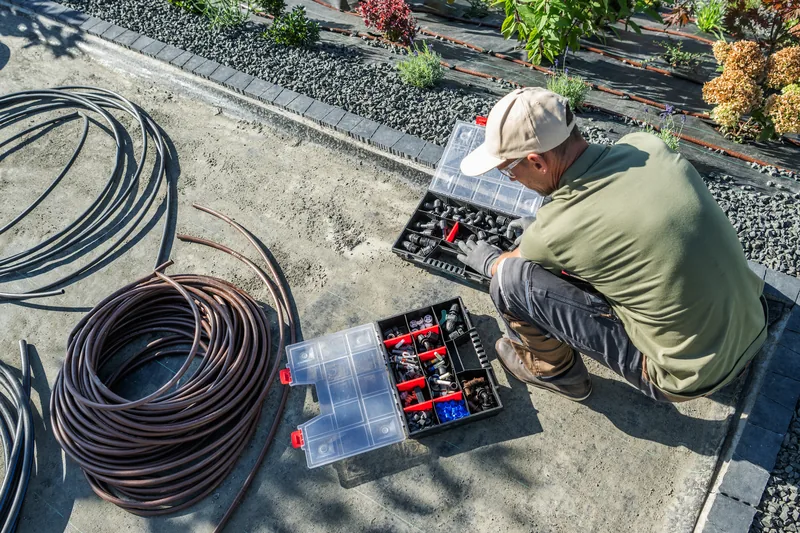
Installer sorting irrigation fittings from parts trays beside coils of poly tubing

Irrigation Maintenance

A system rarely fails all at once. It drifts out of adjustment first. Scheduled irrigation maintenance cleans nozzle filter screens, straightens risers, resets arc and radius, and checks solenoids and field wiring. We reset the seasonal adjust percentage as daylight and rainfall change. Schedule a one-time sprinkler tune-up or quarterly maintenance.

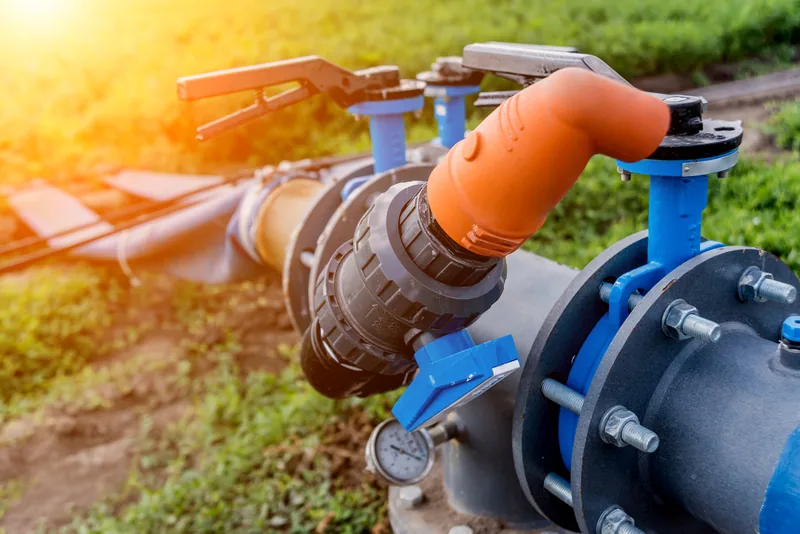
Filtration and valve assembly with pressure gauge on an irrigation mainline

Sprinkler Pumps, Controllers and Water Sources

Four supplies are available around Winter Haven: city water, reclaimed water, a private well, and the lakes themselves. Each one changes the hardware on the property. We match the irrigation pump, the filtration and the controller to the supply a system actually runs on.

Choosing the Water Source

City water is the simplest to connect and the most expensive to run across a season. Reclaimed water is supplied for irrigation and stays separate from the potable plumbing. A well skips the meter but brings a pump, a pressure tank and its own upkeep. Lake frontage opens up surface water, with an intake and filtration to match. Municipal water generally needs the least equipment, while well- and lake-fed systems can cut metered water use but add pumps, filtration and maintenance.

Filters, Intake Screens and Backflow Protection

The dirtier the source, the more filtration goes in ahead of the zones. A disc or screen filter sits before the valves, and drip emitters need a finer stage than spray heads. On a potable connection the backflow assembly goes in first, at the tap, with the filter downstream of it.

Choosing Between Smart and Conventional Controllers

The right controller depends on how actively the system will be managed. A conventional timer costs less, as long as someone resets it when the season turns. An owner who travels, or who runs several properties, is better served by a controller reachable from a phone. When watering rules change, you can update the schedule without walking out to the controller.

What Drives Sprinkler System Installation Cost in Winter Haven

Sprinkler system installation cost depends primarily on the system layout, water source and obstacles the piping must cross. We base your irrigation system cost on the equipment, materials and labor the property requires.

  • Zones and components: The number of zones is usually the largest cost factor. Every zone adds a valve, a wire run, pipe and heads, and separating turf, beds and trees raises the count.
  • Head count and type: An open lawn may require fewer heads than a property divided into narrow or irregular planting areas, because rotors cover more ground per head. After zone count, head count is usually the next largest driver of lawn irrigation system cost.
  • Water source and backflow: A well or lake source adds a pump, a tank or an intake. The connection type also sets which backflow assembly goes on.
  • Controller and sensors: A conventional timer costs less than a weather-based controller, and a two-wire decoder system costs more than either on a site with a lot of valves.
  • What the pipe crosses: Drives, walks and mature roots mean boring or sleeving, which raises sprinkler installation cost. On new construction the sleeves go in before paving, while a retrofit trenches through established turf and adds sod and bed repair afterward. Trench length drives the labor more than trench depth.
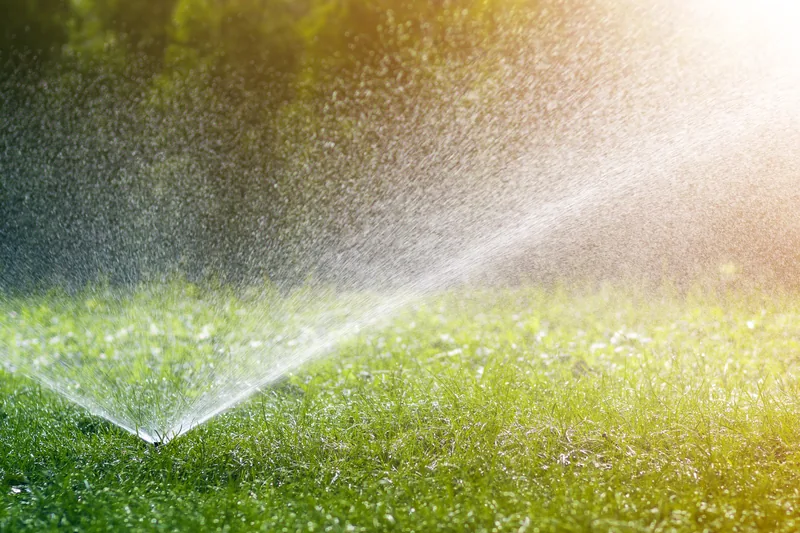
Pop-up spray head running a fan pattern across a lawn

How a Sprinkler System Installation Works, Step by Step

Winter Haven Irrigation follows the same sequence on every installation, from your first call through the walkthrough at the end.

  1. 1.

    Property Evaluation

    During a free on-site visit, you show us the lawn and the planting beds while we take our own measurements.

  2. 2.

    System Design and Written Estimate

    You receive a proposed zone layout and an itemized written estimate built from what we measured.

  3. 3.

    Utility Locate and Site Preparation

    We file a Sunshine 811 locate at least two business days ahead, flag the irrigation route, and confirm the work area with you before anyone digs.

  4. 4.

    Pipe, Valve and Sprinkler Installation

    Most of the lawn stays intact while we work, and the disturbed grass knits back over the following weeks.

  5. 5.

    Controller and Sensor Setup

    We program a separate run time for every zone, fit the rain shutoff device and check that it works.

  6. 6.

    Coverage Testing and Adjustment

    You can watch the coverage test if you want to, while we correct spray arcs, watering radii and any overspray near walls or pavement.

  7. 7.

    Walkthrough and Handover

    We walk the system with you zone by zone, covering controller use and where the valves sit. You keep an as-built map of the finished layout. If new sod has gone down, we set it to water more often and for shorter runs until the turf roots.

Start with an on-site estimate by calling (863) 877-4859 or using the quote form.

Call Now: (863) 877-4859

Watering Restrictions and Sprinkler System Scheduling in Polk County

A controller is only compliant if its schedule matches the rules that apply right now. Those rules are set regionally, enforced locally, and they change with drought conditions.

Where Watering Rules Come From and How to Check Yours

The Southwest Florida Water Management District sets watering limits across the region. Cities and utilities enforce them and can be stricter, so the rules inside Winter Haven can differ from those in the towns around it. For an address in the city, check the City of Winter Haven water conservation and watering rules (https://www.mywinterhaven.com/367/Water-Conservation). Everywhere else, use the district's restrictions by county (https://www.swfwmd.state.fl.us/business/epermitting/district-water-restrictions).

A private well or lake frontage is not an exemption, since restrictions apply whatever the water source. We program your controller to the rules in force when we hand the system over, and we reset it when the district or the city revises them.

Programming a System Around Limited Watering Windows

A tight watering window concentrates a zone's weekly water into fewer, shorter runs. Cycle and soak splits each zone into two or three passes with a pause between them, so the water soaks in rather than running off the surface. Run times come from the sprinkler output we measured on site, so each pass puts down only what the ground can take before the next one.

Pop-up spray head running at low sun, backlit spray

Irrigation Systems Built for Winter Haven Conditions

Winter Haven's landscape centers on the Chain of Lakes, with roughly 50 lakes inside or along the city limits. The North Chain and South Chain connect through a canal and lock between Lake Hartridge and Lake Conine. Legoland Florida occupies the grounds of the old Cypress Gardens attraction, and Chain of Lakes Park and Polk State College are other familiar landmarks. Citrus packing helped build the city, and the first Publix opened here in 1930.

The city sits about 161 feet above sea level on sandy Central Florida ridge ground near the Peace River headwaters. Winter Haven gets about 46.12 inches of rain a year, and 26.63 inches of that falls between June and September.

Sandy Soil and Watering Rates

Water-holding capacity is how much of what you apply stays within reach of the roots. A sandy profile holds about an inch of usable water per foot of depth. Loam holds twice that or more. Anything that travels below the root zone is gone. Sand still sheds water where the ground is compacted and the sprinklers put it down faster than it can soak in, which is why application rate matters as much as run time.

Summer Rain and Moisture Sensors

Summer storms here arrive most afternoons, and a fixed program runs straight through them. The sprinklers come on over ground that is already saturated, so the water drains past the roots without doing anything for the lawn. Shutoff technology is what breaks that cycle.

Lake-Fed Irrigation in the Chain of Lakes

The South Chain lies almost entirely inside the city, so lakefront and canal frontage is common on ordinary residential lots. Around Lake Howard, Lake Shipp and Lake Elbert, drawing irrigation water from the surface is a routine option rather than an unusual one.

Areas We Serve

Winter Haven Irrigation provides installation, repair, maintenance and inspection throughout the areas listed below. Water sources, utility requirements and watering restrictions can vary between Winter Haven and nearby Polk County communities.

Winter Haven neighborhoods and lake areas:

  • Downtown Winter Haven
  • Florence Villa
  • Lake Howard
  • Lake Silver
  • Lake Elbert
  • Lake Mariam
  • East Lake Mariam
  • Eloise Woods
  • Cypresswood
  • Orchid Springs
  • Traditions
  • Terranova
  • Lake Shipp Heights
  • Poinsettia Park
  • Interlaken

Nearby Polk County communities we serve:

  • Lake Alfred
  • Eagle Lake
  • Dundee
  • Cypress Gardens
  • Inwood
  • Jan Phyl Village
  • Wahneta

What Winter Haven Property Owners Say

Hear from homeowners, builders and property managers we have served throughout Winter Haven and Polk County.

Sprinkler System Installation FAQs

What Is Included in a New Sprinkler System Installation?

We install the mainline, laterals, valves, heads, controller, rain shutoff device and backflow assembly. You also get the as-built drawing, which marks every valve and the area each one waters.

How Many Sprinkler Zones Will My Property Need?

Available flow in gallons per minute sets the ceiling, and turf, beds and trees each take their own zone on top of that. On a quarter-acre lot that usually lands somewhere between 6 and 10.

Can You Install a System That Runs on Lake or Well Water?

Yes. A lake-fed system needs a screened intake, a foot valve and filtration; a well needs a pump and a pressure tank. Neither is exempt from watering restrictions.

How Do I Know Which Days I Am Allowed to Water?

It depends on the property's location and the restrictions in force at the time. Check the City of Winter Haven water conservation page, or your own provider if you are outside its service area.

Do I Need a Permit to Install a Sprinkler System?

Permit requirements depend on the scope of the project and whether the property is inside Winter Haven or elsewhere in Polk County. When a permit is required for an installation or major alteration, we handle the application and required inspections.

How Much Lawn Disruption Does Installation Cause, and How Long Does It Take?

Many residential jobs are finished within about two days, depending on the size and complexity of the system, and where site conditions allow we bore under drives and walks rather than cutting them. Avoid walking or mowing directly over the trench lines until the disturbed turf has settled.

How Much Does a Sprinkler System Installation Cost?

The number of zones, head types, water source and any driveways or walkways the piping must cross all affect the price, as set out under What Drives Sprinkler System Installation Cost above. We quote from measurements taken on the property rather than from a published range.

Request a Free Sprinkler System Installation Estimate

Winter Haven Irrigation covers professional sprinkler system installation, repairs and maintenance throughout Winter Haven and nearby Polk County communities. Tell us what the property has now and what you want it to do. We come out, walk the property with you, and put a price in writing.

Reach us on (863) 877-4859, or send the details through the quote form.